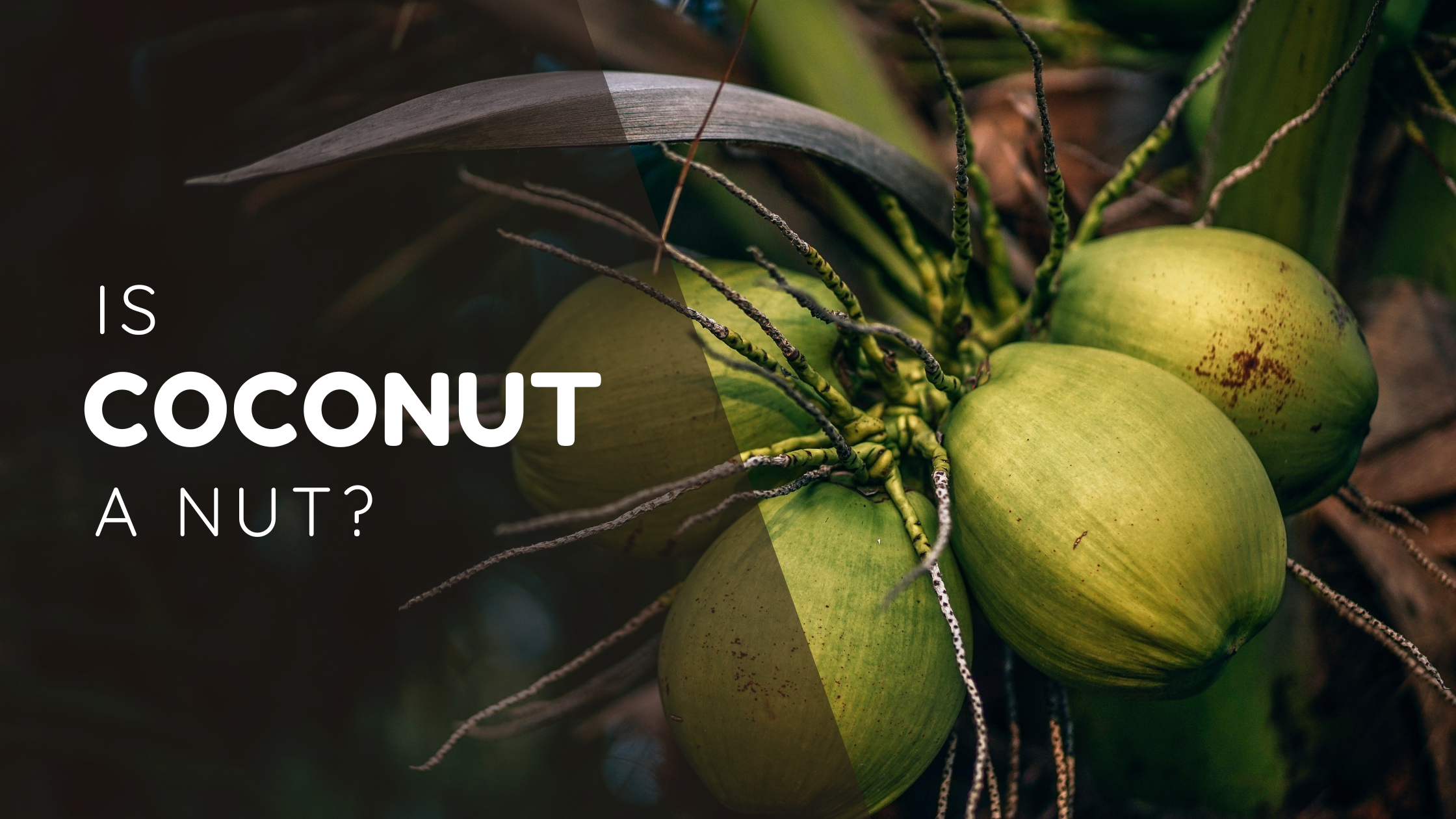
Quick answer: No, a coconut is not a true nut. Botanically speaking, coconut is classified as a fibrous one-seeded drupe, a category that also includes peaches, plums, and cherries. The “nut” in coconut is a common-name holdover, not a scientific classification. So when people ask, is coconut a nut, the short and accurate response is that it behaves more like a fruit with a hard shell than the actual nuts you’d find in a mixed nut tin, such as almonds or cashews.
This distinction matters more than it seems, especially for people managing food allergies, chefs categorizing ingredients correctly, and curious minds who just want a straight answer backed by science. Throughout this article, we’ll break down exactly why coconut gets miscategorized so often, what botanists actually call it, how it compares nutritionally and allergenically to tree nuts, and why the culinary world still treats it like one. If you’ve ever paused mid-sentence wondering is coconut a nut while reading a recipe or an allergy label, you’re about to get the full picture.
Key Takeaways
- Coconut is botanically a drupe, not a true nut, because it has three distinct layers: an outer exocarp, a fibrous mesocarp, and a hard endocarp surrounding a single seed.
- The FDA still lists coconut as a tree nut on allergen labels for legal and practical safety reasons, even though true coconut allergies are rare.
- Culinary classification differs from botanical classification, which is why coconut appears in “nut” aisles despite failing the scientific definition of a nut.
- Nutritionally, coconut is closer to a fruit in fat composition than almonds or walnuts, with unique medium-chain triglycerides that set it apart.
What Botanically Makes a Nut?
To understand why the question “is coconut a nut” trips people up, you first need to know what botanists actually mean by “nut.” A true botanical nut is a hard-shelled fruit that does not split open naturally to release its seed, and the shell itself develops from the ovary wall of the flower, thickening as it matures. Chestnuts, hazelnuts, and acorns are textbook examples of true nuts because they fit this narrow definition perfectly. The shell and the seed form together as one indehiscent structure.
Most foods we casually call nuts, like almonds, cashews, walnuts, and pistachios, are not true nuts at all. Almonds are actually the seeds found inside a drupe, walnuts are the seeds of a drupe-like fruit, and cashews grow from the bottom of a fruit called a cashew apple. This is why the culinary and botanical worlds diverge so sharply, and it’s also why answering is coconut a nut requires separating scientific accuracy from everyday kitchen language.
Coconut fits neither definition of a true nut. It lacks the single fused shell-and-seed structure that defines true nuts, and instead it develops through a completely different fruit-forming process. Understanding this distinction is the first step to understanding coconut’s real botanical identity, which we’ll explore in the next section in more detail.
Why Is Coconut Classified as a Drupe?
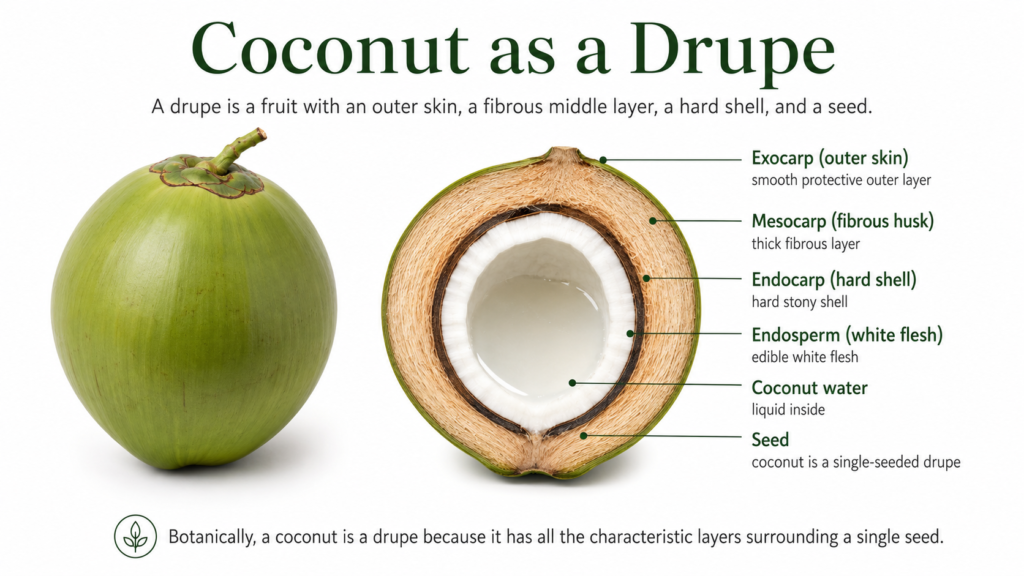
A drupe is a fruit with three distinct layers: a thin outer skin called the exocarp, a fleshy or fibrous middle layer called the mesocarp, and a hard, woody inner layer called the endocarp that encases the seed. Peaches and plums are classic drupes with a soft mesocarp you eat and a hard pit you discard. Coconut follows this exact same structural blueprint, which is precisely why botanists answer is coconut a nut with a firm no and instead file it under drupes.
In a coconut, the smooth outer husk is the exocarp, the thick fibrous layer you often see on whole coconuts is the mesocarp, and the hard brown shell surrounding the white flesh is the endocarp. Inside that endocarp sits the actual seed, which is the edible white meat and coconut water we consume. This three-layer architecture is the defining scientific reason coconut cannot be grouped with hazelnuts or chestnuts, despite sharing a hard outer casing.
Some botanists further describe coconut as a “fibrous drupe” because the mesocarp is dry and fibrous rather than fleshy like a peach. This subtle distinction still keeps coconut firmly in the drupe family. So while the question is coconut a nut feels reasonable given its hard shell, the layered structure tells a completely different botanical story rooted in fruit science.
| Fruit Type | Example | Shell/Seed Structure | Coconut Match? |
| True Nut | Hazelnut, Chestnut | Shell forms directly from ovary wall around seed | No |
| Drupe | Peach, Plum, Coconut | Three layers: exocarp, mesocarp, endocarp | Yes |
| Legume | Peanut | Seeds enclosed in a pod that splits open | No |
| Seed (inside a drupe) | Almond, Walnut | Seed found inside a separate drupe fruit | No |
Culinary vs Botanical Definitions
The kitchen and the science lab rarely agree, and coconut sits right at the center of that disagreement. Culinarily, “nut” is a loose term applied to any hard-shelled, edible seed or kernel with a rich, dense texture, regardless of botanical accuracy. This is why almonds, cashews, and coconut all sit comfortably in the same grocery aisle even though only true nuts like hazelnuts belong there scientifically. When someone asks is coconut a nut in a recipe context, they usually just mean it looks and behaves like one in cooking.
This culinary grouping exists for practical reasons. Coconut shares textural and flavor qualities with tree nuts, it’s often shredded, toasted, or ground similarly to almonds, and it appears in the same recipes, from granola to baked goods. Food manufacturers and chefs prioritize function and flavor pairing over taxonomy, so the culinary “nut” category becomes a catch-all for hard-shelled, oil-rich plant foods rather than a scientifically precise term.
Regulatory bodies further blur the line. The U.S. Food and Drug Administration legally classifies coconut as a tree nut for allergen labeling purposes, even while acknowledging its botanical classification as a drupe. This regulatory choice exists to protect consumers, not to settle the science debate. So when is coconut a nut comes up in a legal or allergy context, the honest answer becomes more nuanced than a simple yes or no.
| Context | Classification | Reason |
| Botanical Science | Drupe (fruit) | Three-layer structure around a single seed |
| FDA/Allergen Labeling | Tree Nut | Legal precaution for allergy safety |
| Culinary Use | Nut-like ingredient | Shared texture, flavor, and cooking applications |
| Everyday Language | “Nut” (common name) | Historical naming convention, not scientific basis |
Coconut Allergies: Nut or Not?
This is where the question is coconut a nut becomes genuinely important rather than just academic trivia. Because the FDA lists coconut as a tree nut on packaging, many consumers assume anyone with a tree nut allergy must automatically avoid coconut too. In reality, research shows that true coconut allergies are quite rare, and most people allergic to tree nuts like almonds or cashews can safely consume coconut without any reaction.
That said, cross-reactivity is not impossible, and a small percentage of individuals with severe tree nut allergies do report reactions to coconut. Because coconut and tree nuts sometimes share manufacturing facilities and processing equipment, cross-contamination risk is a separate concern from a true biological allergy. This is part of why regulators err on the side of caution and keep coconut labeled alongside tree nuts, prioritizing consumer safety over strict botanical correctness.
If you or someone you’re cooking for has a tree nut allergy, the safest approach is medical guidance rather than assumption. A few practical points worth remembering:
- Coconut allergies are clinically rare compared to peanut or tree nut allergies, according to allergy research bodies.
- Cross-reactivity is possible but uncommon, so testing with a doctor is the only reliable way to confirm safety.
- Packaged foods may still warn “contains tree nuts” even when coconut is the only nut-labeled ingredient present.
- Always check ingredient labels carefully, since manufacturing cross-contact can differ from the biological allergy itself.
Coconut’s Nutritional Profile Compared to True Nuts
Beyond classification, the nutritional makeup of coconut also differs meaningfully from true tree nuts, reinforcing why is coconut a nut deserves a nuanced answer rather than a flat yes. Tree nuts like almonds and walnuts are generally rich in polyunsaturated and monounsaturated fats, protein, and fiber, with a nutrient profile suited to heart-healthy diets. Coconut, by contrast, is dominated by saturated fat, primarily in the form of medium-chain triglycerides, which the body metabolizes differently than the long-chain fats found in most other nuts.
This fat structure is one of coconut’s most distinctive nutritional traits. Medium-chain triglycerides are processed more quickly by the liver and have been studied for their potential energy and metabolic benefits, separating coconut nutritionally from almonds, cashews, and pistachios almost entirely. Coconut also contains significantly less protein per serving than most true nuts, further widening the nutritional gap between the two categories.
Coconut water, unique to this fruit, adds another dimension entirely absent from tree nuts. Rich in natural electrolytes like potassium, it functions more like a hydrating beverage than anything resembling nut consumption. This nutritional divergence is one more piece of evidence supporting the drupe classification over the common nut label.
| Nutrient (per 100g) | Coconut Meat | Almonds | Walnuts |
| Total Fat | 33g | 49g | 65g |
| Saturated Fat | 30g | 4g | 6g |
| Protein | 3.3g | 21g | 15g |
| Fiber | 9g | 12g | 6.7g |
| Primary Fat Type | Medium-chain triglycerides | Monounsaturated | Polyunsaturated |
Coconut in Global Cuisines and Everyday Uses
Regardless of the botanical answer, coconut’s culinary presence worldwide is undeniable, and this widespread use is exactly why the debate over is coconut a nut persists in everyday conversation. Across Southeast Asia, the Caribbean, and South Asia, coconut appears in curries, desserts, drinks, and savory dishes, valued for its versatility rather than its scientific classification. Fresh young coconuts, like the diamond-cut variety served at hospitality venues and events, showcase coconut water and tender meat in their purest, most natural form.
In Western kitchens, shredded and desiccated coconut are baking staples, often shelved right next to almonds and walnuts, reinforcing the everyday nut association. Coconut oil, coconut milk, and coconut flour have also become mainstream ingredients in health-focused and allergen-conscious cooking, frequently marketed as nut-free alternatives to almond or cashew-based products, which itself is a subtle nod to coconut’s true botanical identity as a non-nut.
Beyond the kitchen, fresh coconuts have become a centerpiece at weddings, corporate events, and five-star hospitality experiences, prized for their striking presentation and refreshing taste straight from the shell. This growing demand for fresh, elegant coconut service reflects how far coconut’s appeal extends beyond simple nutritional or botanical debates into genuine event and lifestyle experiences.
Conclusion
So, is coconut a nut? Scientifically, no. Coconut is a fibrous drupe, structurally related to peaches and plums rather than almonds or hazelnuts, even though regulatory labeling and everyday language keep the “nut” association alive. Understanding this distinction helps with everything from allergy safety to simply satisfying culinary curiosity. Whether you’re drawn to coconut for its nutrition, its versatility, or its refreshing taste straight from the shell, its true identity as a drupe only adds to its appeal. If you’re looking to experience coconut at its freshest, businesses like The Branded Coconut bring diamond-cut young coconuts to hotels, restaurants, and events across Sydney, letting you enjoy this remarkable fruit exactly as nature intended.
FAQs
Is coconut a nut or a fruit?
Coconut is botanically classified as a fruit, specifically a fibrous drupe, not a true nut. Its layered structure of husk, fiber, and hard shell matches peaches and plums far more closely than hazelnuts or chestnuts.
Why does the FDA label coconut as a tree nut?
The FDA classifies coconut as a tree nut for allergen labeling purposes to protect consumers, even though it acknowledges the botanical classification as a drupe. This is a legal and safety decision rather than a scientific one.
Can people with tree nut allergies eat coconut safely?
Most people with tree nut allergies can safely eat coconut, since true coconut allergies are clinically rare. However, cross-reactivity is possible, so medical guidance is recommended before assuming safety.
Is coconut water considered a nut product?
No, coconut water is the liquid found inside the seed of the coconut drupe and shares no nutritional or structural similarity to true nut products. It’s closer in composition to a natural electrolyte beverage.
Why do people still call coconut a nut?
The term persists mainly due to historical naming conventions and coconut’s hard, nut-like shell. Culinary tradition and common language often override strict botanical classification in everyday use.